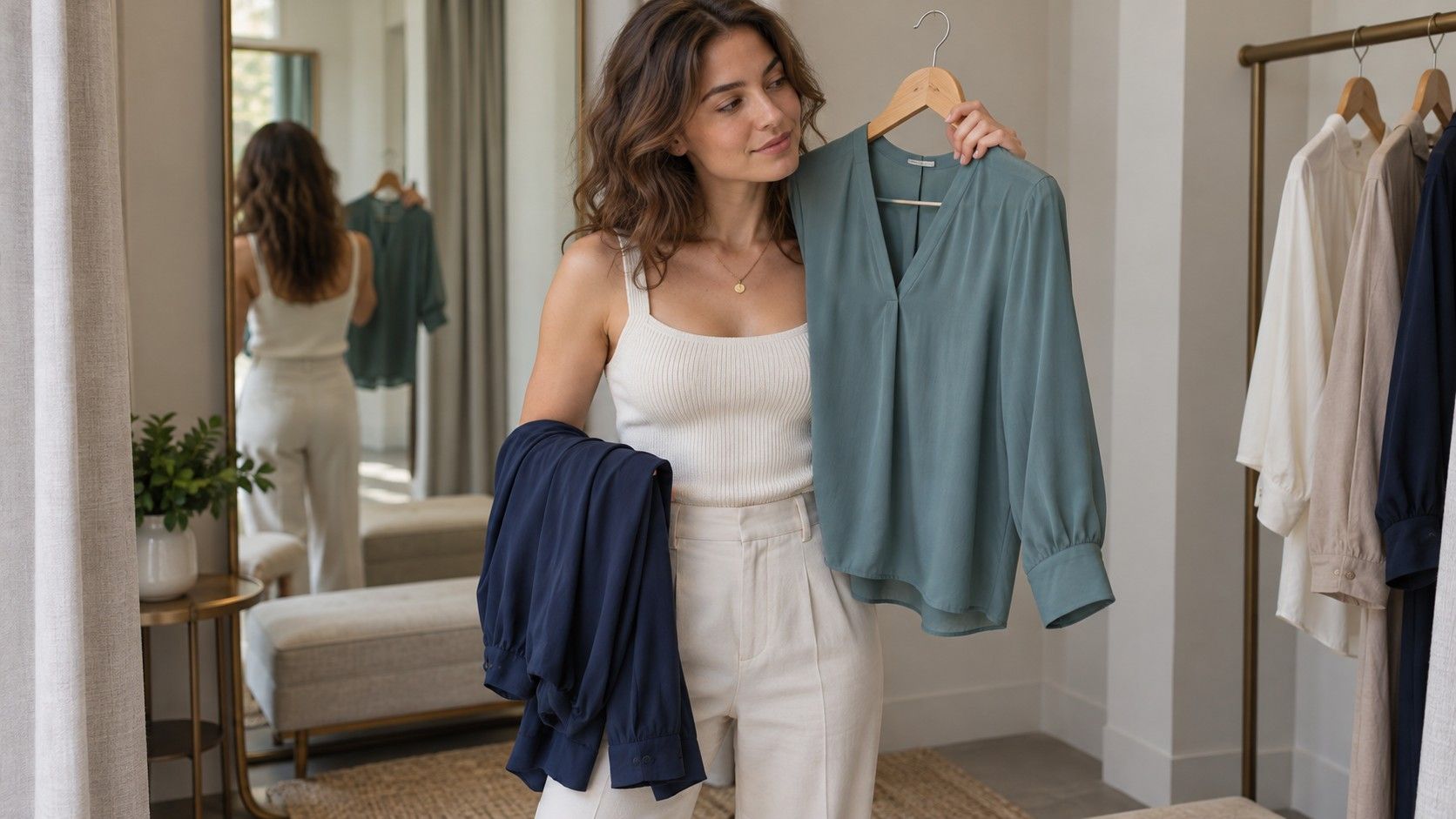
A free color analysis quiz can give a name to something you have noticed in the fitting room: one blue shirt makes getting dressed easy, while another seems to ask for more makeup. The useful part is the set of colors to investigate afterward. A seasonal label is a suggestion built from your answers, and those answers can be surprisingly slippery. Hair described as ash brown in one question may look golden beside a window. Start with a modest aim: find a few comparisons worth making with clothes you already own.
Know what the questions actually measure
Most quizzes ask you to describe your hair, eyes, skin, jewelry preferences, or the colors people compliment. A questionnaire works with those descriptions rather than observing fabric against your face. If you select “warm brown,” you are supplying a judgment as well as a color. Two people looking at the same hair might choose different answers, particularly when the choices are limited to warm, cool, and neutral.
Read the questions before committing to the result. Does the quiz let you answer “unsure”? Does it distinguish natural hair from dyed hair? Does it explain what it means by contrast? A pale skin tone is not automatically a low-contrast appearance, and dark skin does not establish a warm undertone. Skin depth, the difference between features, and the way muted or bright colors look are separate observations. A useful color analysis quiz leaves room for those distinctions.
Some systems group colors into four seasons; others divide those groups into smaller palettes. This means two results may differ in detail without disagreeing about every color. “Summer” and “soft summer” operate at different levels of specificity. Before interpreting a mismatch, check which system each quiz uses and whether its sample palette shows actual color swatches or simply broad names such as pink and green.
Answer from natural features rather than preferences
Set aside a quiet ten minutes near a window, with room lamps switched off if they add a yellow or blue cast. Use a mirror as well as any photograph the quiz requests. A picture taken at sunset, under a bathroom light, or through a beauty filter makes a poor reference. Remove tinted glasses and brightly colored clothing close to the face. If you wear makeup, remember that foundation, blush, and bronzer affect the appearance you are being asked to describe.
Answer the question that is actually written. “Which colors do you enjoy?” asks about taste. “Which colors make your face look more even?” asks about an effect you may need to test. It is fine to love orange and find some oranges difficult near your face. Preferences can guide a wardrobe; they are weak evidence for the quiz's proposed category. Likewise, owning silver jewelry does not demonstrate that silver suits you better than gold.
For a question about natural hair, use the undyed roots if they are visible or a reasonably clear older photograph. Do not try to subtract color from a heavily edited image in your head. When eye descriptions feel vague, choose the closest answer and keep a note of the uncertainty. Repeatedly guessing until a favorite season appears makes the final answer less useful. A result based on three uncertain choices should carry less weight than a fabric comparison you can repeat.
Check a result against fabric comparisons
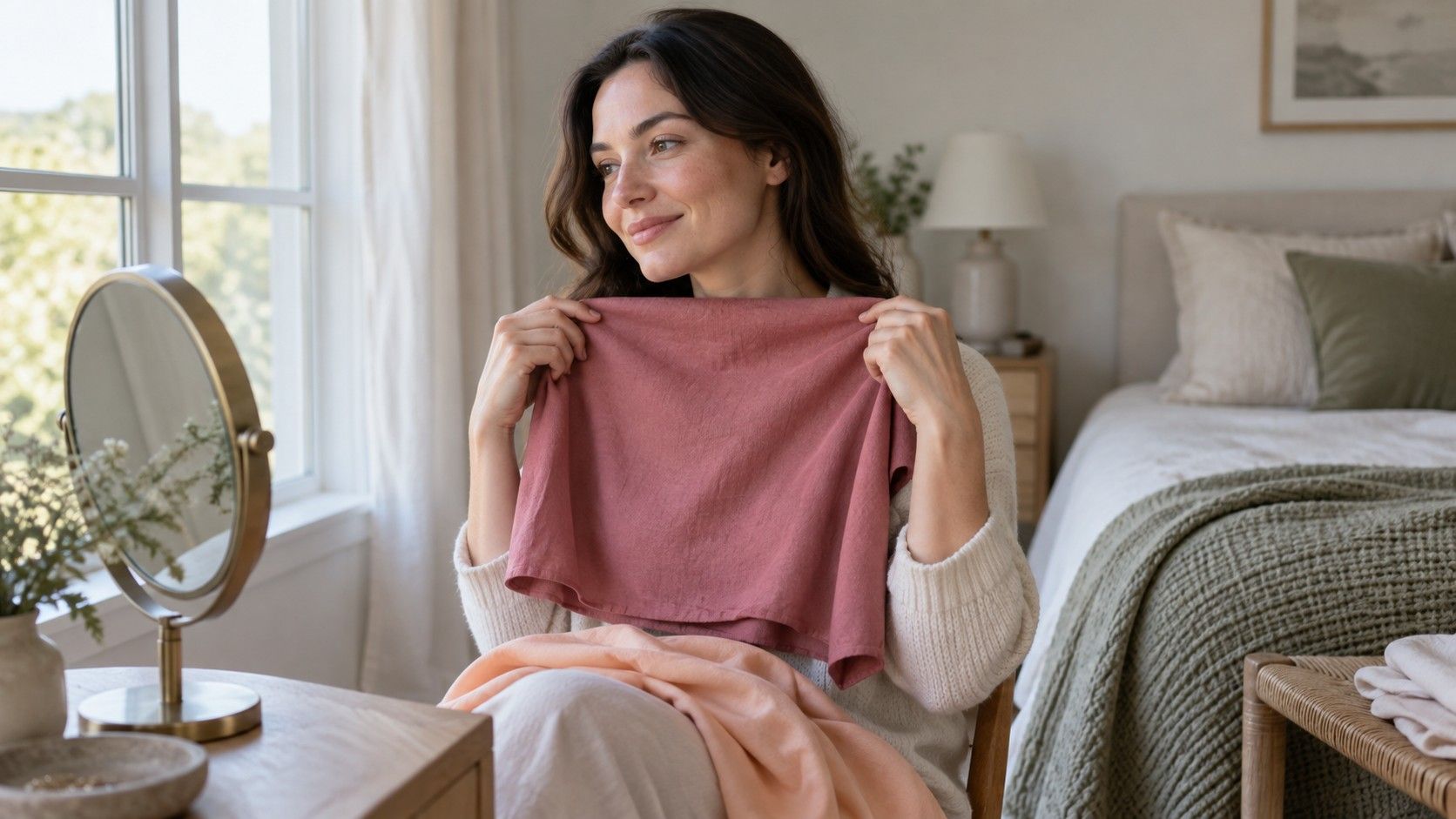
Take two similar garments from your wardrobe and compare them one at a time under your chin. Change one feature where possible: a muted rose against a brighter pink, or a warmer red against a cooler red of similar depth. Comparing pale cream with deep navy changes several things at once, so it tells you little about which difference matters. Plain fabrics are easier to assess than patterns, shiny satin, or a scarf with several colors.
Keep your position and the light consistent. Look at your face before looking at the cloth. Does one option make shadows around the mouth seem more obvious? Does your face appear clearer, or does the fabric grab all the attention? These are styling judgments, and people can reasonably disagree. Avoid expecting every line or shadow to disappear. A flattering color cannot deliver the effects of different lighting, sleep, or makeup.
| Quiz suggestion | Useful comparison | What to record |
|---|---|---|
| Try cooler colors | Similar-depth berry and warm brick | Which gives a more balanced face-to-fabric impression |
| Try softer colors | Muted rose and clearer pink | Whether brightness overwhelms or helps your features |
| Try deeper colors | Medium and deep versions of one color family | Whether the darker cloth adds definition or feels heavy |
| Try lighter colors | Light blue and a medium blue with similar character | Whether the lighter option looks fresh or loses definition |
Make a short record such as “muted rose easier than bright pink, morning window.” That is more useful for shopping than “definitely summer.” Repeat with a second color family before drawing a broad conclusion. One excellent berry sweater does not establish that every cool color will work, and one difficult yellow does not rule out an entire group.
Handle two different quiz results
If one free color analysis result says autumn and another says summer, compare the underlying recommendations. Both might suggest moderate depth and muted colors while differing about warmth. That gives you a narrow next step: compare warmer and cooler muted shades. There is no need to restart with every season or decide which website has won. Keep the shared advice provisional and test the disputed feature.
A conflicting answer can also come from language. “Golden skin” may refer to surface color, while “warm undertone” refers to a styling category; quizzes sometimes blur the two. A question about looking better in white or cream is difficult if you have never compared similar fabrics in consistent light. Return to uncertain answers and check what evidence you actually have. Changing one answer to reflect a better observation is reasonable; changing five until the label feels pleasing is a different exercise.
Try the comparison on another day, keeping the setup similar. If your preferred colors remain mixed, use a mixed palette. You might like muted greens, clear blues, and a particular red without needing a single category to approve them. A seasonal framework can organize ideas, but the clothes still have to work in your lighting and with the way you dress. An unresolved boundary between palettes is an acceptable outcome.
Keep a useful palette without buying a new wardrobe
Begin with three items close to your face: a frequently worn top, an outer layer, and a scarf or collar. Check whether the quiz's suggestions improve the combinations you already use. A camel coat can be worn with a different neckline; a black shirt can stay in rotation because you enjoy its sharpness. There is no practical reason to discard good clothing after a color analysis test. Free guidance becomes expensive if it creates an unnecessary replacement list.
Save photographs of two or three successful combinations, with a note about the lighting. Phone images can shift colors, so use them as reminders rather than exact shopping swatches. When buying online, broad labels such as sage, stone, or raspberry vary between retailers. Look at several product photographs and check the return terms. When possible, compare a new garment with a familiar favorite in the same room before removing tags.
A small working palette might include two neutrals and three accent colors. Choose them from repeated comparisons and everyday needs: the blue you wear to work, a softer green for knitwear, a red you like beside your face. Keep a favorite color elsewhere if it is awkward as a neckline. Shoes, trousers, bags, and prints offer plenty of space for colors whose effect near your face you do not enjoy.
Use the quiz again only when there is something specific to check, such as an answer you misunderstood. Repeating questionnaires endlessly can bury a simple observation under new labels. The useful finish is a wardrobe decision you can explain: this cream works with these two jackets, this pink is easier than that one, and the proposed season remains a helpful reference. That is a sound return from a free tool.