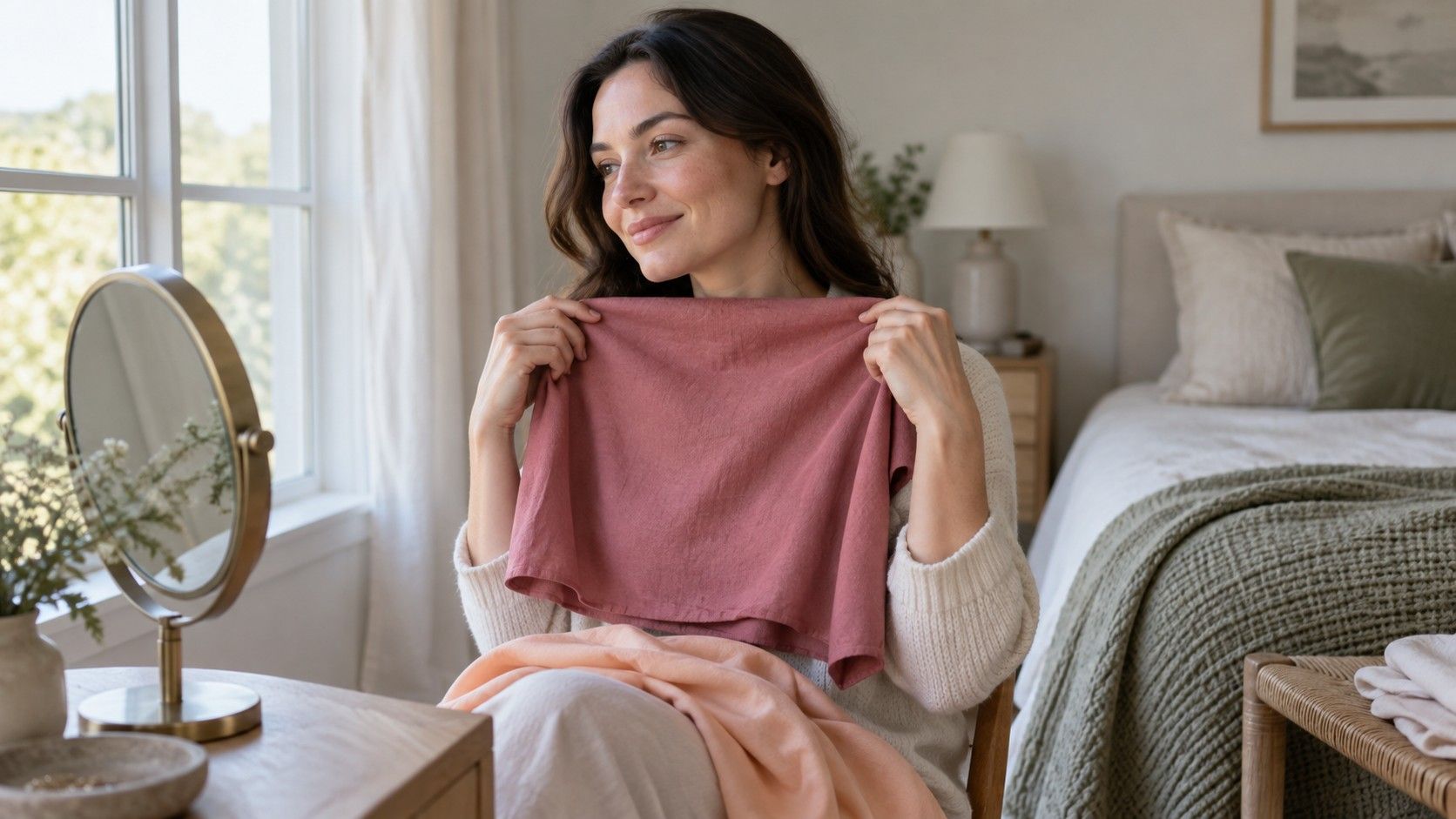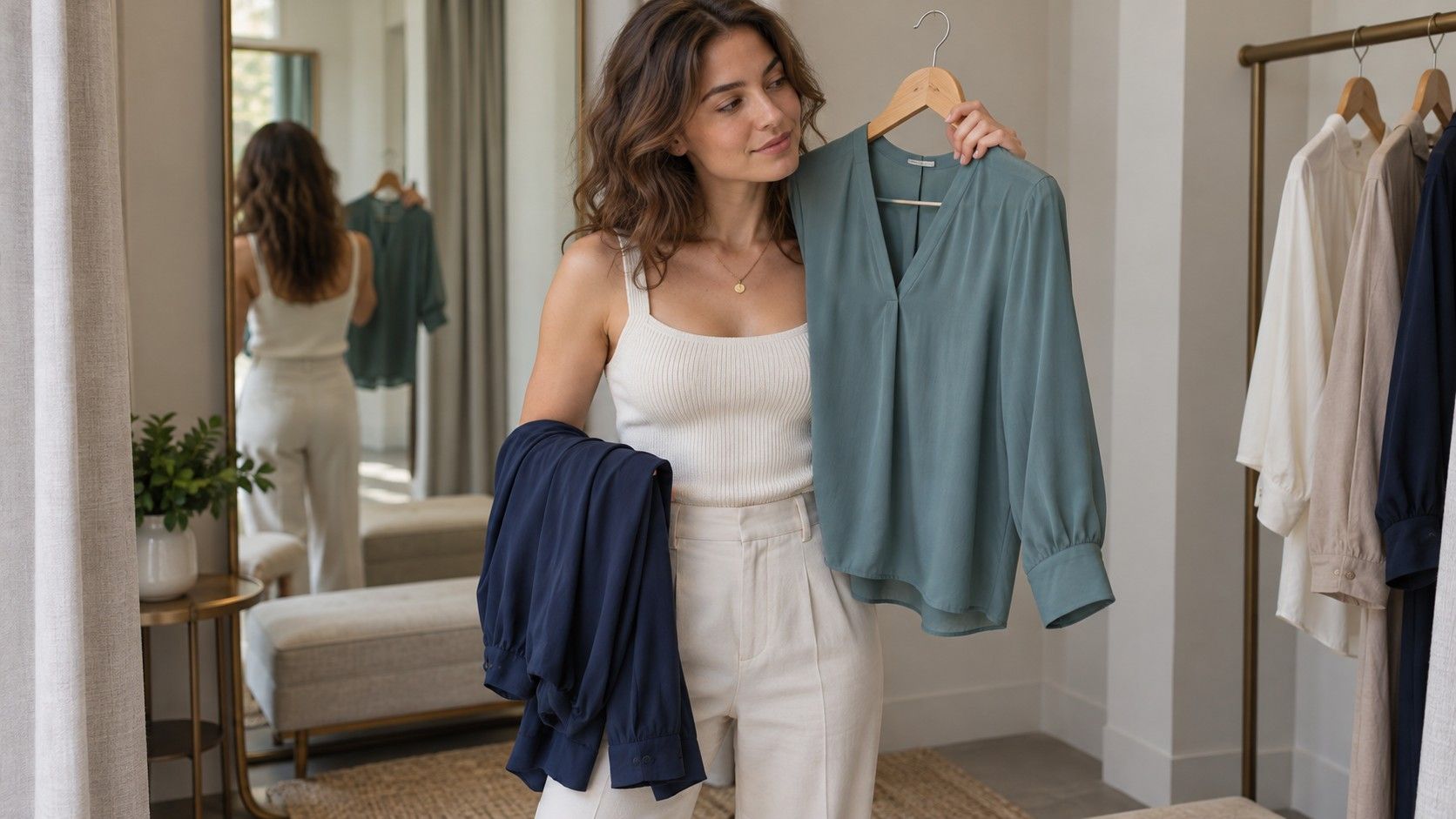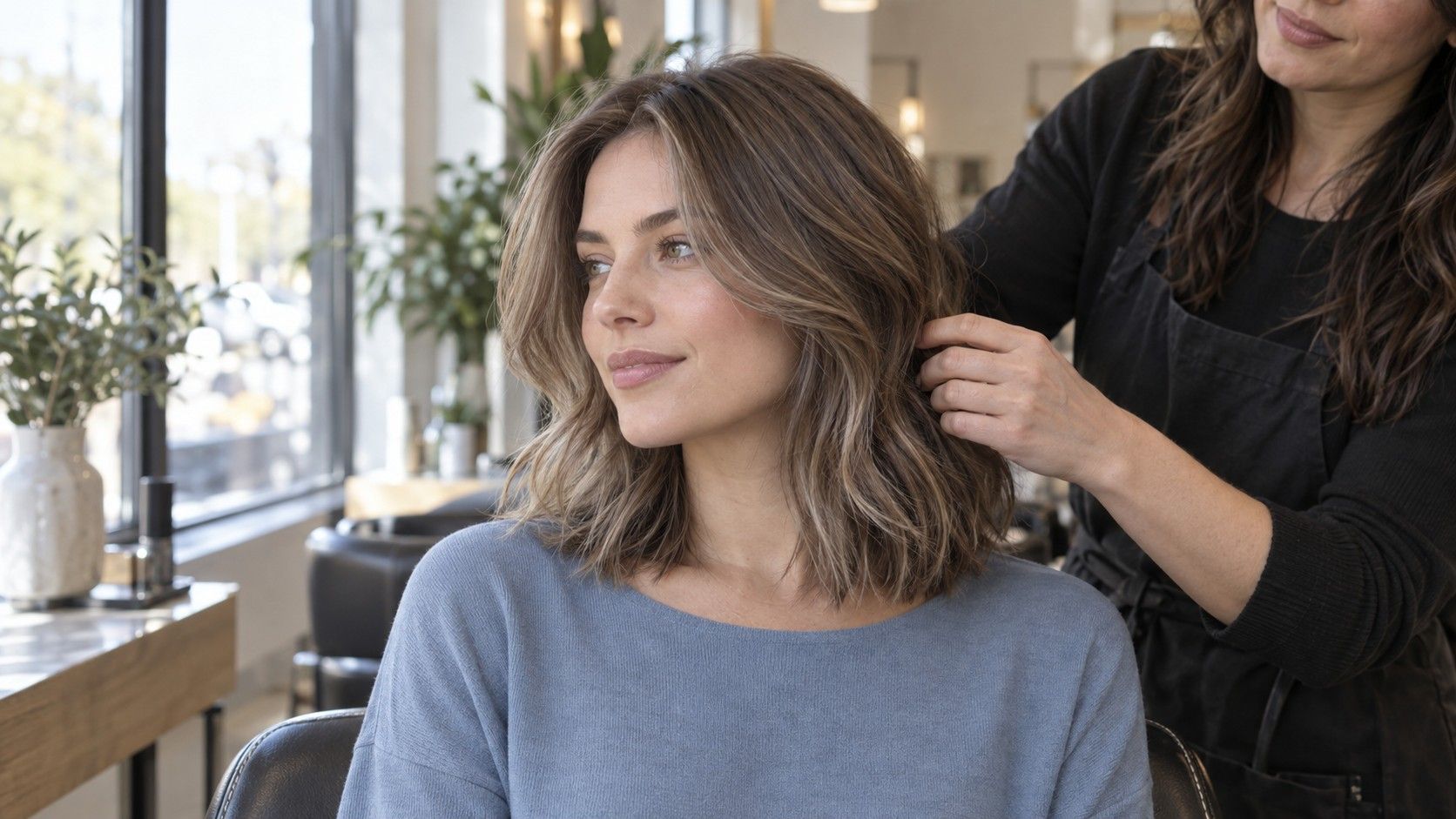
A search for Soft Summer hair color often produces a narrow row of smoky blondes and cool browns. The photographs may be attractive, but they leave out your current depth, the placement of lighter pieces, and the upkeep behind the result. A better comparison starts with the amount of change you want to see around your face, then turns that preference into a clear conversation with a stylist.
When a seasonal result makes you want to change everything
Soft Summer commonly refers to a muted, generally cool-leaning palette in twelve-season color systems. The exact boundaries vary, and a home test or photo tool is a provisional guide. It does not establish one correct hair color. Before searching for an ash-blonde formula, check whether the palette itself has helped with clothes: do softened blue, rose, and gray-green repeatedly feel easier than clear, vivid alternatives?
Start with your present hair in indirect daylight. Note its depth beside your face, its overall warm or cool impression, and the difference between the roots and ends. Hair can contain several visible tones, so a single word such as brown may hide more than it explains. A medium brown with subtle lighter pieces creates a different frame from a solid brown at the same average depth.
Also look at the amount of contrast you already enjoy. Does your current hair let you wear muted tops easily, or do you find yourself adding stronger lipstick and darker clothes to balance it? That is a practical observation, not evidence that the hair is wrong. A bold contrast can be a deliberate style choice. Decide whether you want a softer relationship or simply a different color before making an appointment.
When ash, neutral, and warm all sound plausible
Hair color names are loose. Mushroom, beige blonde, ash brown, and smoky brunette can mean different things across salons and product ranges. A photograph labeled ash may look beige in daylight, while a neutral shade may contain enough warmth to feel golden beside a cool gray top. Compare examples at similar depth; otherwise you may prefer the lighter picture rather than its temperature.
For a Soft Summer direction, softened neutral-to-cool references are sensible candidates to discuss. That could mean a restrained beige blonde or a muted brown, depending on your current color and preferred depth. It does not mean all warmth must disappear. A slightly warm reflection in hair can sit comfortably in an overall softened look. A strongly copper or bright gold effect may create more contrast than you want, but that is something to assess in context.
Choose three reference images that differ mainly in warmth. Keep the haircut, depth, and lighting as similar as possible. Ask what you like about each: the absence of bright orange reflections, the softness around the face, or the distinction between the roots and ends. Those descriptions are more useful than requesting the best hair color for Soft Summer as if it were one universally agreed shade.
Very gray-looking examples deserve the same scrutiny as very golden ones. A heavily filtered image can remove skin warmth and hair warmth together, making the result seem more harmonious than it would in ordinary light. Look for believable skin color, visible texture, and more than one photograph of the same result. The label cool should not become an instruction to make every brown look flat.
When highlights become the first thing you see
Placement and contrast can matter as much as the overall shade. Fine, low-contrast lighter pieces create a different impression from thick pale sections against dark roots. If your aim is softer framing, compare the lightest areas with the surrounding hair rather than considering the blonde tone alone. A cool highlight can still be visually strong when the depth gap is large.
Pay particular attention to the pieces nearest the face. A light section at the temple or beside the jaw may change the effect more than several lighter pieces through the back. In reference photos, compare hair worn down with hair tucked behind the ears. The same placement can look quite different once the front is moved away from the face.
Bring a photograph of a result that feels too striped, too pale, or too dramatic as well as one you like. Explain the difference in plain terms: less separation between dark and light; a softer front; no very bright band around the face. A stylist can then discuss what is realistic for your starting point and history. This is a conversation about the desired appearance, not a reason to choose a chemical process from an online palette.
Consider the full haircut, too. A short cut shows a different distribution of roots and lighter ends from long hair, and a fringe places color directly above the eyes. Reference images with a similar cut are easier to interpret. If you are changing the cut and color together, ask to discuss both before settling on a photograph whose effect depends mostly on its shape.
When an app preview looks convincing
A digital preview is useful for a rough depth comparison. Try a version slightly darker than your current hair, a similar-depth version, and a slightly lighter one, using the same original photograph. Keep the face unchanged. If a tool smooths the skin, alters the eyebrows, or adds makeup automatically, the comparison no longer isolates the hair.
Look at the broad frame first. Does the darker version create a stronger outline than you want? Does the lighter version reduce a contrast you like? Do not spend too long deciding between tiny shifts of ash and beige on a screen. Display settings, the original lighting, and the tool's color overlay make those differences uncertain. The preview cannot predict texture, shine, coverage, or how a result will appear as it grows.
Use two ordinary photographs if possible: one with the hair down and one showing the face clearly with the hair partly away. Both should be unfiltered and taken in similar indirect daylight. A second image can reveal that your favorite preview relied on a flattering shadow or a warm lamp. If the answer changes completely, treat the preview as an idea generator rather than a purchase decision.
A photo tool also cannot assess what is achievable from previously colored hair. Keep its output separate from the practical consultation. Save one or two useful versions and note exactly what they demonstrate, such as softer contrast or a less golden impression. There is little value in presenting a flawless digital picture as a guaranteed target.
When you are preparing for the salon conversation
Bring a small, coherent set of references instead of a large album of unrelated blondes and brunettes. Include your current hair in daylight, two desired examples near your preferred depth, and one result you want to avoid. If the images disagree in color, say which feature matters in each. You may like the softness of one and the root depth of another.
Tell the stylist about your color history and the upkeep you are willing to maintain. Ask how the proposed appearance is likely to look between appointments and what differences may remain between roots and ends. A result that depends on frequent maintenance may be a poor practical choice even if its photograph fits a palette beautifully. Agree on priorities before discussing the route to the result.
Use Soft Summer hair as a description of an effect: softened, relatively low in contrast, and usually leaning neutral to cool. Then translate it into visible choices. How dark should the frame around the face be? How much lighter should the brightest pieces look? How warm is too warm for your taste? These questions give the stylist something more concrete than a seasonal name.
After any change, compare it in ordinary daylight with familiar tops before replacing makeup or clothes. A new frame can take time to feel familiar, and a single indoor photograph is a poor basis for another major decision. Keep the best reference images and note what worked in the finished result. A useful Soft Summer hair color is one you enjoy wearing and can maintain, with a level of softness that fits your own face and style.